Mattress materials and construction
Inside Vispring’s Cashmere Superb: Natural Fillings and Pocket-Spring Support
Cashmere may be the headline, but the Vispring Cashmere Superb is a more layered story: British fleece wool, cotton, silk, horsetail and carefully arranged pocket springs all contribute to the finished sleep surface. Here’s how those materials and construction details work together—and what they can, and cannot, tell you about the feel of a mattress.
Some mattresses make their first impression through a dramatic profile or a long list of technical features. The Vispring Cashmere Superb invites a different kind of look. Its name points to one prized natural fiber, but the mattress is built around a combination of upholstery materials and spring support. Cashmere is part of the appeal; it is not the whole design.
That distinction matters. A luxury mattress is not defined by one ingredient alone. Its comfort depends on how the surface materials, internal fillings, spring system and chosen tension work together for a particular sleeper. In the Cashmere Superb, natural fibers sit alongside a two-layer, hand-nested calico pocket-spring construction. The result is a product that offers a useful case study in the relationship between softness and support.
Vispring lists the mattress with blended British fleece wool, cotton, cashmere and silk, together with hand-teased Austrian Moosburger horsetail, real Shetland wool and cash-hair. It also specifies two rows of pocket springs, four spring-tension choices and a range of upholstery and finishing details. Those facts give shoppers a starting point—but they do not replace trying a mattress, checking the exact configuration or considering individual sleep needs.
Cashmere is one part of a broader natural-fiber blend
Cashmere has a strong reputation for softness and warmth, and for good reason: it is a fine animal fiber often associated with a light, comfortable feel. In a mattress, however, the relevant question is not simply whether cashmere is present. It is how it is used among the other upholstery materials and how the complete sleep surface feels under the body.
The Cashmere Superb combines cashmere with British fleece wool, cotton and silk in its listed natural fillings and ticking. Each fiber brings different characteristics to a textile system. Wool is commonly valued for resilience and warmth; cotton is widely used in bedding because it is familiar and breathable; silk is fine and smooth to the touch. Cashmere contributes its own soft, insulating character. Together, these materials create a composition more nuanced than a single-fiber label might suggest.
The mattress listing also names horsetail, an established natural upholstery material used in some traditional mattress constructions. The horsetail is described as hand-teased and Austrian in origin. The product information does not provide a complete layer-by-layer map showing precisely where every fiber sits or the quantity of each material. That is worth keeping in mind: a materials list helps identify what is included, but it is not the same as a detailed cross-section or a promise about a particular sensation.
One listed component is cash-hair, alongside real Shetland wool. The inclusion of several natural materials reflects a blended approach to upholstery rather than a mattress made from cashmere alone. For shoppers, that broader picture is more useful than the name by itself. The name highlights a notable fiber; the construction determines how the entire mattress is assembled.
What natural fillings contribute to the sleep surface
In a mattress, upholstery fillings form part of the comfort system above and around the support core. They help create the immediate surface feel and can influence how the bed responds as a sleeper settles in. Their effects depend on factors such as fiber type, quantity, arrangement, density and the way the mattress is tufted and finished.
Natural fibers are often appreciated for their tactile character and for the way they can be combined into layered constructions. But “natural” is not a shortcut for “right for everyone.” Some sleepers prefer a firmer, less yielding surface; others want more cushioning. A fiber name, by itself, cannot predict how a specific person will experience pressure relief, warmth or support. Body shape, sleep position, personal temperature preferences and the bed base can all influence the result.
It is also helpful to separate the materials story from the care story. Natural fillings do not necessarily mean a mattress can be washed or maintained like a cotton blanket. Mattresses have their own care requirements, and owners should follow the maker’s instructions for the exact model and configuration. The product details provided for the Cashmere Superb do not specify a complete care routine, so shoppers should request current guidance rather than assume.
A closer look at the pocket-spring construction
At the heart of the Cashmere Superb is a two-layer, hand-nested calico pocket-spring construction. Pocket springs are individual coils enclosed in fabric pockets. Because each spring can respond more independently than a single interconnected coil system, pocketed designs are intended to provide a more localized response to pressure. The actual feel, though, depends on the spring specification and the rest of the mattress—not just the phrase “pocket spring.”
Vispring lists two rows of vanadium steel pocketed springs and describes the construction as hand-nested. The product information also gives a king-size count of 2,856 springs. That number can sound impressive, but spring count should be read in context. Counting methods and mattress sizes differ between products, and a higher count does not automatically mean better comfort or support. The design, spring tension, coil dimensions, upholstery and fit for the sleeper all matter.
“Hand-nested” describes an arrangement in which springs are placed and organized by hand as part of the construction process. Calico refers to the cotton fabric used to encase the springs. These details speak to the way the spring unit is put together; they are not, on their own, a guarantee of a particular firmness or of a mattress lasting a specific number of years.
The combination of spring layers and natural upholstery is central to the Cashmere Superb’s design. The spring unit supplies the underlying response, while the upper materials contribute to the feel of the surface. Thinking of those systems separately can make comparison easier: ask what is supporting the body, what is cushioning it, and how the construction is intended to balance the two.
Four spring tensions—and why choosing one takes thought
The Cashmere Superb is listed in Soft, Medium, Firm and Extra Firm spring tensions. That range gives shoppers options, but the labels should be treated as a starting point rather than a universal measurement. Firmness terms are not always directly comparable across brands, and the same mattress can feel different depending on the sleeper’s body weight, shape, preferred position and the surface beneath it.
- Soft: may appeal to someone seeking a more yielding initial feel, although softness alone does not establish whether a mattress will provide suitable support.
- Medium: offers a middle label within this model’s options, but “medium” is not a standardized feel across every manufacturer.
- Firm: may suit shoppers who prefer a more resistant surface, subject to personal comfort and support needs.
- Extra Firm: is the most rigid-sounding option in the listed range, though the precise sensation should be confirmed with a knowledgeable retailer or through a suitable trial.
When possible, test the mattress in a position similar to the one you usually sleep in. Give yourself time to settle rather than making a decision after a quick press of the hand. If two people share the bed, both should try it, because comfort preferences and body proportions can differ. Ask whether the quoted tension describes the mattress springs, the overall feel, or both, and whether the available setup can be adjusted for different needs.
It is equally sensible to discuss the foundation. A mattress and its base function as a system, and a different base can affect the way the mattress performs. The Cashmere Superb listing describes a matching divan construction separately, including a hand-nested calico pocket-spring structure and solid timber frame. The divan is offered in several heights, including Sovereign high, Sovereign low, Sovereign shallow or bed base, and Sovereign firm edge. These are configuration details to verify with the retailer, rather than assumptions to make about every purchase.
Craftsmanship in the finishing details
Luxury construction is not only about the central spring unit. The Cashmere Superb is listed with hand-tied woollen tufts and twine, three rows of hand side-stitching, horizontal handles and air vents. Each detail has a place in the finished mattress, from securing the upholstery to helping make the mattress easier to turn or position.
Tufting involves anchoring layers through the mattress, helping hold materials in place. Side-stitching is a finishing technique applied around the edges, while handles can assist with moving the mattress. Air vents are included as part of the border design. Their presence should not be interpreted as a promise that a mattress will solve overheating; sleep temperature is affected by the room, bedding, sleeper and full construction.
The listed mattress depth is 9.1 inches, with an additional 2.4 inches of doming, subject to a stated tolerance. That profile can matter when planning a bed frame, fitted sheets and the overall height of the sleeping surface. It is worth confirming the final dimensions for the exact size and specification, especially if the mattress will be paired with an existing base.
How to evaluate a cashmere mattress without getting swept up in the name
A premium fiber can be appealing, but a thoughtful purchase begins with practical questions. What does the full construction include? Which spring tension is available for the required size? Does the shop offer an in-person test or a trial period? What are the delivery, rotation and care instructions? How does the warranty work, and what conditions apply?
Ask for clarification if product language is broad. For example, a materials list may identify fibers without stating their exact proportions or placement. The Cashmere Superb information gives a spring count for a king size and describes its fillings, spring structure and finishing details, but consumers who need further specifics should request the current technical specification. It is reasonable to ask whether any elements vary by size or by the selected configuration.
Consider your own priorities, too. If you sleep warm, ask how the complete mattress and bedding system may suit your needs rather than relying on one fiber’s reputation. If you have pressure-sensitive areas, test the mattress in your regular sleeping position and pay attention to how your body feels after a few minutes. If you share a bed, consider motion, edge feel and whether both sleepers can agree on the tension.
Finally, keep the mattress in perspective as an investment in everyday use. Materials and hand-finishing can be important, but so are comfort, fit, clear terms and good aftercare. A well-informed decision is less about buying the most glamorous-sounding ingredient and more about understanding what the mattress is, what it is designed to do, and whether it suits the person who will sleep on it.
Cashmere in the bedroom: a separate layer, a different job
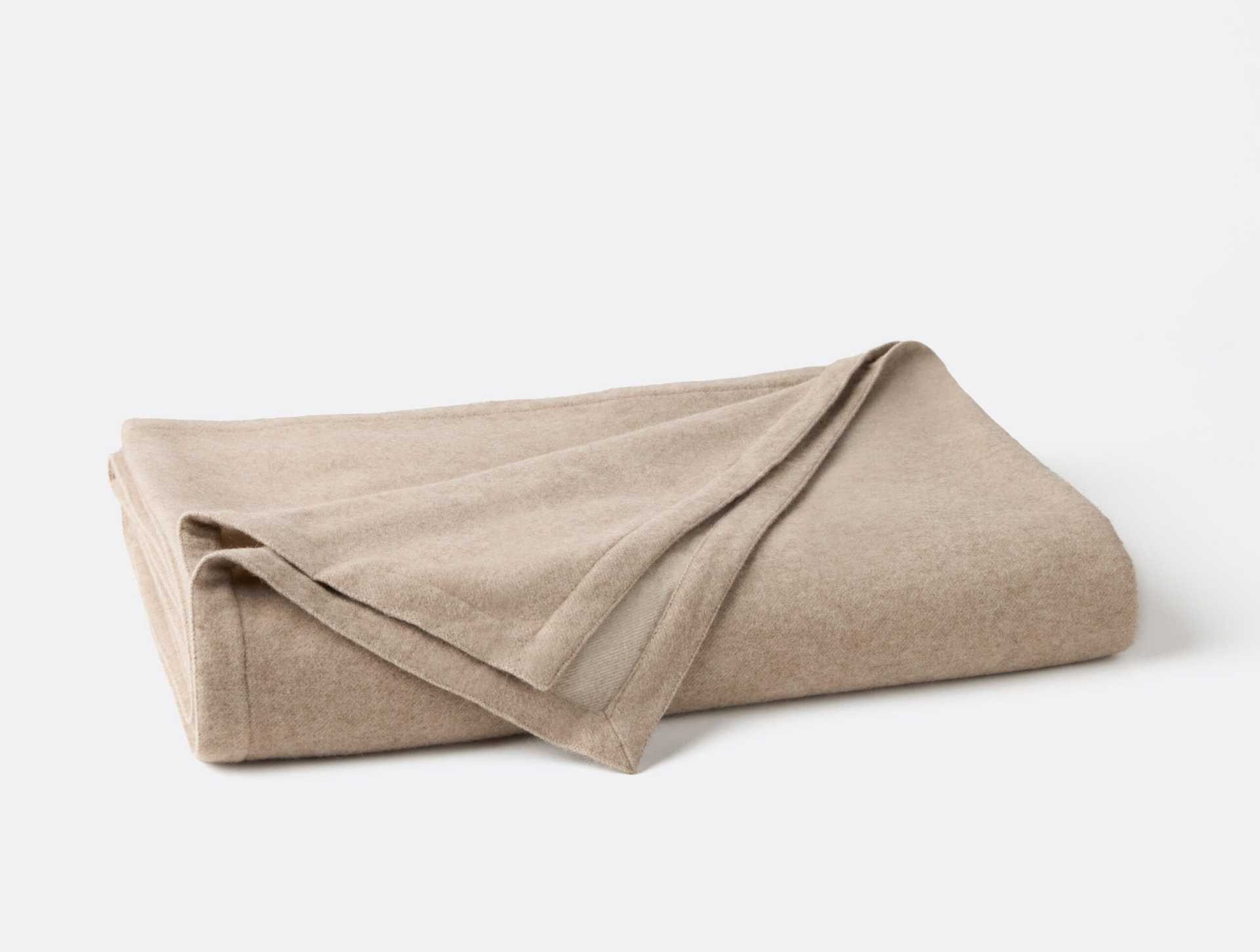
Cashmere also appears in bedroom textiles beyond mattresses, where it can be appreciated as a removable layer rather than part of a fixed support system. For example, the Santa Lucia Cashmere Blanket is described as 100% cashmere, with a diagonal twill weave and a soft, lightweight drape. Its product information says the cashmere is sourced from China and the blanket is woven in Lithuania, and specifies dry-clean-only care.
A blanket like this is not a substitute for a mattress’s springs or upholstery. It serves a different purpose: adding a textile layer to a bed or living space. Keeping that distinction clear is useful when comparing products. A cashmere blanket may offer a tactile accent and extra layer of warmth, while the Cashmere Superb’s cashmere is part of a complete mattress construction that also includes other fillings and spring support.
The takeaway: a layered design, not a one-fiber promise
The Vispring Cashmere Superb brings together a recognizable luxury fiber and a much wider construction story. Its listed fillings include cashmere alongside British fleece wool, cotton, silk, horsetail, Shetland wool and cash-hair. Under those materials is a two-layer, hand-nested calico pocket-spring system, offered in four tensions and finished with details such as hand-tied tufts and side-stitching.
For shoppers, the most useful takeaway is also the simplest: consider the mattress as a whole. Cashmere helps explain its material identity, but it cannot tell you by itself how the bed will feel, whether a given tension is suitable, or how the mattress will perform in your room. Look closely at the construction, test the options where possible, confirm dimensions and care requirements, and choose according to your own comfort needs. That is how a beautiful materials story becomes a practical sleep decision.